Greece
Athens
Greece’s capital: hills, history and city life
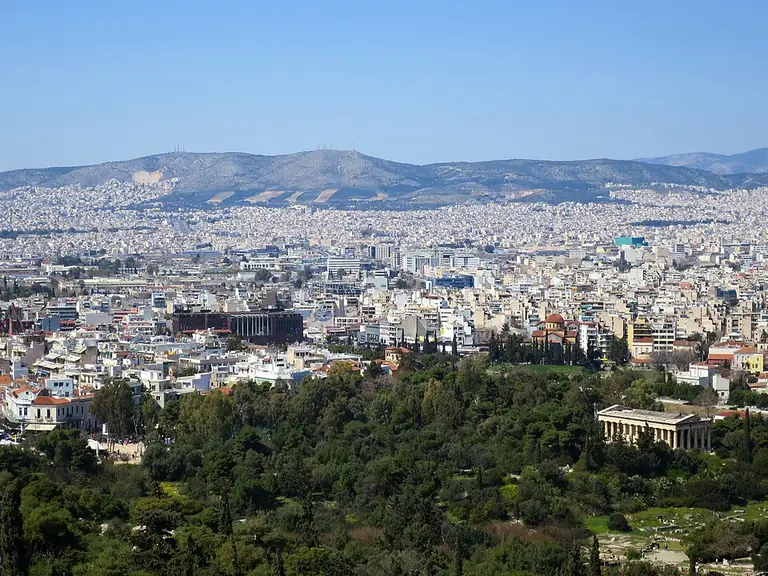
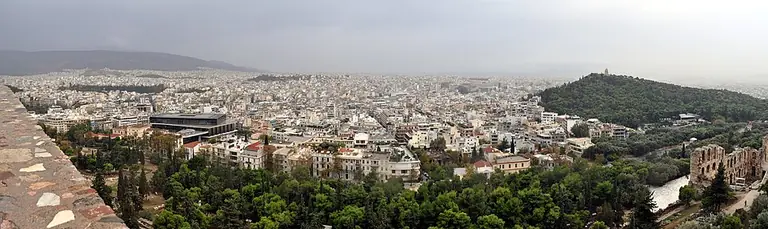
Athens combines ancient monuments, neoclassical streets and neighbourhoods of cafés, workshops and museums. From Plaka beneath the Acropolis to Pangrati’s squares and Kypseli’s architecture, different everyday routes reveal different sides of the city. When choosing where to live, distinguish the Municipality of Athens, neighbouring cities in the metropolitan area and wider Attica, then test the actual walk from a home to the station and places you would use.
- Country
- Greece
- Region
- Attica
- Modern national capital
- Since 1834
- Municipality of Athens
- Seven municipal communities
- Acropolis Museum
- Opened in 2009
Explore the destination
Athens, its metropolitan area and Attica
Athens became the capital of the modern Greek state in 1834. The municipality has seven municipal communities, while familiar names such as Plaka and Koukaki describe neighbourhoods and urban areas. Piraeus and Glyfada are separate municipalities within the wider urban setting. Attica covers a broader territory, including the coast and further destinations. For a prospective home, establish the municipality, street and actual entrance before comparing everyday journeys.
The Acropolis and the streets of Plaka
The ancient Acropolis defines the historic skyline, while Plaka at its foot reveals a more intimate city of neoclassical houses, Byzantine churches and small streets. Pedestrian Dionysiou Areopagitou provides a way to explore the setting of ancient monuments. Choose a particular focus for a walk: street architecture, a museum or an archaeological site. Plan the Acropolis and Acropolis Museum as individual stops, checking entry arrangements for each.
Syntagma, shopping streets and a garden
Syntagma’s name refers to the constitution and the events of 1843. The square opposite Parliament is a meeting place and a focus of civic life; the commercial centre extends through Ermou Street and the area between Syntagma, Monastiraki and Omonia. The National Garden, originally a royal garden, offers a different rhythm among trees and ponds. Compare the square, shopping street and your chosen side street individually: they play different roles in an everyday route.
Koukaki, Pangrati and Kypseli
Koukaki connects pedestrian streets and cafés with the cultural setting of the Acropolis. In Pangrati, Proskopon and Varnava squares and the area around the Panathenaic Stadium provide starting points for exploration. Kypseli offers neoclassical houses, Art Deco and modernist apartment buildings. These landmarks help organise walks, but one square cannot represent an entire neighbourhood. When choosing a home, visit the actual street in the morning, in the evening and on a route for daily shopping.
Museums that help explain their buildings
At the Acropolis Museum, the Parthenon Gallery connects sculpture with the temple: its central core follows the orientation and dimensions of the cella. The National Museum of Contemporary Art, EMST, presents another architectural era in the former FIX brewery, associated with post-war modernism. These visits reveal Athens through buildings and their changing uses. Select the collections that interest you and check the exhibition programme separately, leaving time for the surrounding streets.
Transport and the complete journey
Syntagma is an interchange between Metro Lines 2 and 3. An airport journey requires a Line 3 train displaying the appropriate destination; Hellenic Train’s suburban railway is a separate option with its own routes, including services through Athens Railway Station. When comparing addresses, account for the station exit, crossings, transfers and journey home. Check service notices before travelling: a line name alone does not ensure the destination or an unchanged operating pattern.
Orientation coordinates: GeoNames · CC BY 4.0. Coordinates reproduced unchanged; this is a city reference point, not a property address.
Choosing an area and getting to know Athens
Explore Athens through its architecture, cultural places and daily journeys. Use these guides to turn broad neighbourhood impressions into practical questions about a particular address.
Choosing an urban setting for daily life
Start with the scale of the place, then examine streets, the building entrance and journeys you would repeat each week.
Read more
Establish the municipality behind the broad label
A property description using Athens may refer to the wider metropolitan area. Establish whether the address is in the Municipality of Athens, Piraeus, Glyfada or another municipality in Attica. The Athens Riviera is also a coastal label covering different places. Make a short list of regular destinations: work, shopping, activities and a transport hub. Compare those journeys for each home rather than judging only its position relative to the Acropolis on an overview map.
Compare Koukaki and Pangrati on foot
In Koukaki, start with the pedestrian streets and the cultural setting of the Acropolis. In Pangrati, try a route through Proskopon and Varnava squares to see how cafés and smaller streets shape local routines. Use the walks to compare your own habits. Establish where you would buy groceries, how you would return in the evening and how much climbing your route involves. A well-known attraction nearby cannot replace this practical check.
From an appealing street to a particular home
Ermou and the surrounding shopping streets introduce the commercial centre, but a home needs assessment through its own entrance and surroundings. During a viewing, note window orientation, daylight, noise with windows open and closed, the staircase and lift operation. Walk from your stop to the door and locate essential shops and places for a short stroll. Keep these observations separate from your impression of the façade, so you can compare homes using consistent criteria.
Metro, airport and suburban trains
Check the transport system, destination and complete route to the entrance you need. Similar directions on a map can describe different journeys.
Read more
Syntagma and the right station exit
Syntagma connects Metro Lines 2 and 3. Its exits include routes to the square and to Amalias Avenue by the National Garden. For a particular home or museum, identify the appropriate exit and assess the remaining walk: street crossings, stairs, gradients and the approach to the door. If this will be a daily journey, try it at your usual travel time and check the return separately. One convenient station does not establish convenience for every address in the area.
Take an airport-designated Line 3 train
Airport trains on Line 3 are specifically marked: look for Airport on the train and on the platform display. Not every train on the line continues to the airport, so confirm its destination before boarding. With luggage, assess the approach to the platform and any transfers, then check current engineering notices and the departure you intend to use. Do not assume the urban section’s frequency or late-night operating pattern also applies to airport services.
Consider the suburban railway separately
Hellenic Train operates suburban service patterns between the airport, Athens and Piraeus, and between the airport and Ano Liosia. This is a separate system whose stops and journey arrangements need checking independently of the Metro. Athens Railway Station also connects with the national network. Compare the route against your final address, confirming the platform, ticket and transfers. If continuing from the port, add the leg to your actual departure quay rather than ending the journey calculation at Piraeus.
Three ways to explore the city’s history
Ancient temple sculpture, a modernist factory and a town house reveal different periods and scales of Athens.
Read more
Acropolis Museum: understand a temple through sculpture
The Parthenon Gallery connects sculptures with the architecture they came from. The frieze, metopes and pedimental figures are arranged in relation to the temple’s parts; original works are complemented by casts of sculptures held in other collections. Start by understanding the overall arrangement, then choose a few details to examine closely. Plan the archaeological site separately: the museum’s interpretation and a walk on the hill complement one another, but each needs its own arrangements.
EMST: art in a former brewery
The National Museum of Contemporary Art occupies the former FIX brewery. Its modernist redesign was entrusted to Takis Zenetos and Margaritis Apostolidis in 1957. Notice the scale of the industrial building and how it has been adapted for museum use. Choose exhibitions around your interests and the programme for your date. If culture shapes your housing choice, test your own journey to the museum and home again rather than relying on a familiar neighbourhood name.
Benizelos Mansion: the history of domestic life
Benizelos Mansion on Adrianou Street introduces Ottoman-period urban architecture. The main house dates to the eighteenth century and incorporates earlier elements; the courtyard and surviving household equipment help explain how an older home worked. It offers an intimate theme for a separate stop in Plaka. Compare the enclosed façade and courtyard arrangement with neoclassical houses on other streets, and check museum access for your chosen day before visiting.
Walks that help you understand a neighbourhood
A garden, residential streets and a hill each reveal a different urban setting. Choose a route around your interests and everyday needs.
Read more
National Garden: a green pause in the centre
The former royal garden became a public space and took the name National Garden in 1927. Explore its plants, paths and ponds; a Roman mosaic is among its historical features. For a regular walk, the right entrance and route from home matter more than a green shape on a map. Try the route you would use, examining surfaces, resting places and crossings of surrounding streets. Check access arrangements for the day of your visit.
Kypseli: look closely at residential architecture
Explore Kypseli through its succession of architectural styles: neoclassical houses, Art Deco and modernist apartment buildings. Include Drosopoulou and Fokionos Negri streets, with the Municipal Market as a separate cultural stop. Look at entrances, balconies, façade proportions and how buildings meet the street. When choosing a home, complement these observations with a viewing of the building itself: an expressive exterior does not establish an apartment’s condition or the usefulness of its layout.
Kolonaki and the climb towards Lycabettus
Kolonaki lies at the foot of Lycabettus; Dexameni square recalls Hadrian’s reservoir. A walk can combine urban streets with a view over Athens from the hill. The route to the summit can involve stairs and climbs; investigate the funicular option separately, including how to reach it. When comparing homes, try your ordinary route with shopping or luggage and assess the gradient. A scenic outing and an everyday journey place different demands on a route.
Properties in the city
- Orelia Residence
- Premium Residence
- Themis Residence
- Elixir Residence
- Acropolis View Residence
- Lycabettus Hill Residence
- Urban Residence
- Urban Gazi Residence
- Athens Living Residence
- Eos Living Residence
- T15 Residence
- Ardittos House
- Pagkrati Centrale
- Metropolitan Residences
- Kypseli Living
Photo credits
1. acediscovery · Athens panorama · CC BY 4.0. Resized, WebP format.
2. Paweł 'pbm' Szubert (talk) · Athens viewed from the Acropolis · CC BY-SA 3.0. Resized, WebP format.