Spain
Madrid
Old-town squares, Prado art and walks beside the Manzanares
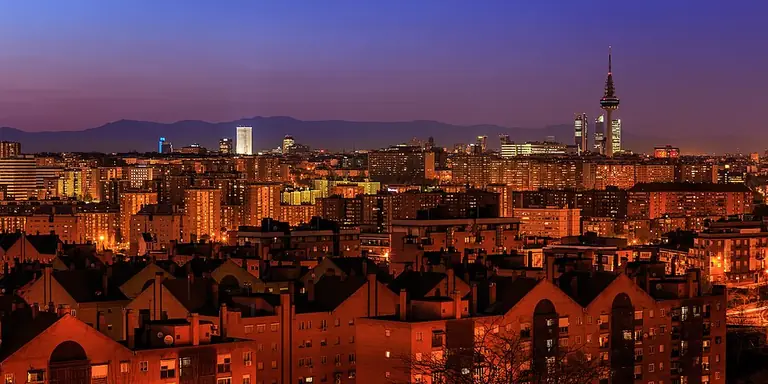
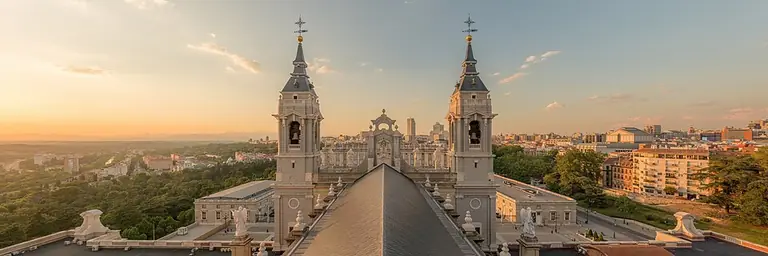
Madrid unfolds through contrasting urban rhythms: La Latina’s small squares, literary streets around Santa Ana, Gran Vía architecture and the museums of Paseo del Prado. Retiro and the Madrid Río riverfront give a walk a different setting. When exploring the city or choosing an address, connect cultural landmarks with the everyday journey home, transport changes and the particular street.
- Country
- Spain
- Municipal organisation
- 21 municipal districts
- World Heritage
- Landscape of Light: Prado, Retiro and Los Jerónimos; 2021
- Gran Vía
- The avenue was developed between 1910 and 1931
- Riverside route
- Madrid Río along the Manzanares
Explore the destination
The city, its districts and familiar area names
Madrid municipality is divided into 21 districts. Names used for walking areas do not always match administrative units: central La Latina and the district called Latina describe different places. Begin with an exact address and its district, then add useful cultural landmarks. The Literary Quarter, museum route and riverside walk help explain the character of places, but do not establish a property boundary or the qualities of an individual building.
La Latina and the Literary Quarter
La Latina’s winding streets open onto Plaza de la Paja, Plaza de los Carros and Plaza de la Cebada; their names recall an earlier trading life. In the Literary Quarter, urban history takes another form: memories of Cervantes and Lope de Vega, inscriptions on Calle Huertas and the theatrical setting of Santa Ana. Alternate small squares with side streets as you explore. To assess the residential surroundings, return to the particular entrance at the time you would normally come home.
From Plaza Mayor to Gran Vía architecture
Plaza Mayor reveals the ceremonial composition of the old city: the arcades and towers of Casa de la Panadería help explain the square’s design. Gran Vía, laid out in stages from 1910 to 1931, tells a later story of modernisation. Metrópolis, Telefónica and Carrión offer contrasting silhouettes and façade details. Look above the shop windows as well as at street level; to explore a particular address more calmly, walk its adjoining street separately.
Prado, museums and the scope of the Landscape of Light
The Landscape of Light World Heritage property includes Paseo del Prado from Cibeles to Atocha, Retiro Park and Los Jerónimos. The designation applies to a defined ensemble rather than the whole of Madrid. The Prado, opened in 1819, also introduces Juan de Villanueva’s architecture. Thyssen-Bornemisza offers a broad view of Western art, while Reina Sofía is associated with twentieth-century art and Guernica. Choose a theme for one visit rather than trying to see everything in a day.
Two different green routes
In Retiro, a walk links avenues, gardens, the large pond and the Alfonso XII monument. Madrid Río follows the Manzanares, where public space created after part of the M-30 was moved underground connects walking routes, bridges and shared outdoor areas. Matadero occupies former slaughterhouse pavilions from the early twentieth century. Choose a particular stretch and entrance, check access for your date, and assess the actual route from home rather than relying on a park name.
Transport: line, terminal and interchange matter
Metro, Cercanías and EMT buses serve different purposes. Metro line 8 links Nuevos Ministerios with the airport and has separate Aeropuerto T1-T2-T3 and Aeropuerto T4 stations. Cercanías C-1 serves T4 and Chamartín Clara Campoamor; check onward changes separately. For everyday travel, compare the whole journey from your building to the destination, including the right exit and accessibility of connections. Check service changes and the timetable for your travel date.
Orientation coordinates: GeoNames · CC BY 4.0. Coordinates reproduced unchanged; this is a city reference point, not a property address.
Choosing an address and discovering everyday Madrid
Compare the impression made by a square or museum with your own routine. These routes help you assess a street, transport changes, cultural plans and walks before drawing conclusions about a particular home.
From an area name to a particular building
A tourist landmark, municipal district and the experience at a building entrance answer different questions. Compare them in sequence.
Read more
Check the municipality and district
Madrid can describe the city or a wider travel destination. Establish the municipality, district and street of an address you are considering. The city has 21 districts; the central walking area of La Latina is distinct from the administrative district called Latina. List your regular destinations and check the route to each. This turns a map of cultural impressions into a practical guide to daily travel, without assuming what lies behind a familiar area name.
Walk the street by day and in the evening
In La Latina, small squares alternate with an irregular street network; around Santa Ana, literary history shares the setting with restaurants and evening gatherings. Explore the particular street at different times. Listen to the surroundings by the windows, find everyday shopping and assess the building entrance. Look at stairs and lifts separately: an attractive façade or walkable visitor area does not by itself answer questions about daily convenience.
Separate the façade from the apartment assessment
On Gran Vía it is easy to focus on the striking outlines of Telefónica and Carrión. When viewing a home, switch to your own checklist: the direction of its windows, the daylight you can observe, ventilation, access and shared spaces. Ask to see the rooms that matter and test the approach from the street. Comparing several addresses against the same list is more useful than extending an impression of a famous avenue to an entire building.
Build the journey from door to door
Start with the terminal or station you need, then check the change and the final stretch. The airport’s name alone does not identify your stop.
Read more
Metro 8: two different airport station names
Line 8 has separate Aeropuerto T1-T2-T3 and Aeropuerto T4 stations; its city terminus is Nuevos Ministerios. First establish your flight’s terminal. Separate airport services connect terminals, while T4S is linked to T4 by an internal automated people mover and is not an independent city-rail station. Allow for the journey inside the airport, luggage and connections rather than relying only on the Metro diagram. Check ticket conditions before travelling.
Cercanías and the night bus serve different plans
C-1 connects airport T4 with Chamartín Clara Campoamor. For Atocha or another station, check the current onward route and whether a change is needed. Exprés Aeropuerto stops at T1, T2 and T4; its daytime city route includes Atocha, while the night service starts at Cibeles. Do not apply the daytime arrangement to a late arrival. Before leaving, check the boarding point, direction and notices of temporary changes.
Repeat your normal journey across the city
Compare addresses using the same destinations: work, classes, shopping or meetings. Walk from the building to the right station entrance and from the exit to your destination, then check the return journey. If step-free travel matters, verify every connection and the relevant lifts for your travel date. Identify a fallback if the service changes. The distance to a station symbol on a map is only one part of assessing the complete route.
Choose a theme for getting to know the city
Paseo del Prado, Retiro and Los Jerónimos form the Landscape of Light ensemble. Within and beyond it, build a cultural day around one interest.
Read more
Prado and Reina Sofía: two ways of looking
Juan de Villanueva designed the Prado building in 1785 for a natural-history cabinet; the museum opened in 1819. You can begin with the architecture and then choose a short route through the galleries. At Reina Sofía, Picasso’s Guernica of 1937 and the story of its creation offer another focused theme. Check the current entrance and available rooms at each museum; the Reina Sofía complex has distinct Sabatini and Nouvel buildings. Avoid making the whole day depend on an assumed gallery sequence.
Thyssen: compare artistic languages
The Thyssen-Bornemisza collection spans seven centuries of Western art, including Old Masters, Impressionism and later movements. Rafael Moneo adapted Villahermosa Palace for the museum between 1989 and 1992. Choose a theme such as light, the urban landscape or colour, and compare how it changes between works. The permanent collection and a temporary exhibition call for separate planning; check which route is available on the day you visit.
A writer’s home and a former Metro station
Lope de Vega’s house museum on Calle Cervantes evokes domestic life in the Spanish Golden Age: the writer lived here from 1610 until 1635. Guided visits need advance booking, and access conditions should be checked for this historic building. Another small-scale visit is the former Chamberí station, part of the original 1919 line and closed to train service in 1966. It now interprets transport heritage; choose an operating station separately for the journey there.
Try a walk you would want to repeat
A park, river and small viewpoint offer different ways to spend free time. Test a manageable stretch and the return journey.
Read more
Retiro: choose an entrance and a destination
The large pond, Alfonso XII monument and rose garden provide different reasons to return to Retiro. For a first walk, pick one destination and a clear entrance, allowing time to get back. The Glass Palace of 1887 is a recognisable example of iron-and-glass architecture, but as of October 2026 it is closed for restoration; do not make an interior visit an assured part of the plan. Check restrictions before setting out, as severe weather can lead to park closures.
Madrid Río and the Matadero pavilions
Along the Manzanares, you can organise a walk around a bridge: historic Puente de Segovia or Puente de Toledo, or the contemporary Arganzuela footbridge. At Matadero, the walk can acquire a cultural theme: former neo-Mudéjar pavilions host contemporary art, theatre and other programmes. Choose a short stretch, assess crossings and places to pause, and check the route back to transport. Plan an exhibition or performance separately using the centre’s current programme.
A small square and an open view
Read Plaza Mayor as an architectural composition, paying attention to the arcades of Casa de la Panadería. Las Vistillas offers another scale: trees, changes of level and views towards the Manzanares and Casa de Campo. Assess the approach and a suitable place to pause, especially if steps make walking difficult. To get a feel for a neighbourhood, try combining this stop with your everyday errands, then walk back to the address you are considering.
Properties in the city
- Velia
- Finley
- Kyrenia
- Santa Catalina 5
- Viriato 25
- Almagro Residences
- Hermosilla 67
- Alcalá 141
- Neo Arganzuela
- Mesena 80–82
- Los Cerros — Metrovacesa
- Neinor Panoramic Homes
Photo credits
1. Barcex · Madrid skyline in the evening · CC BY-SA 3.0. Resized, WebP format.
2. Fernando Pascullo · View from the dome of Almudena Cathedral · CC BY-SA 4.0. Resized, WebP format.