Spain
Malaga
Málaga: the Alcazaba, Picasso’s city and Mediterranean neighbourhoods
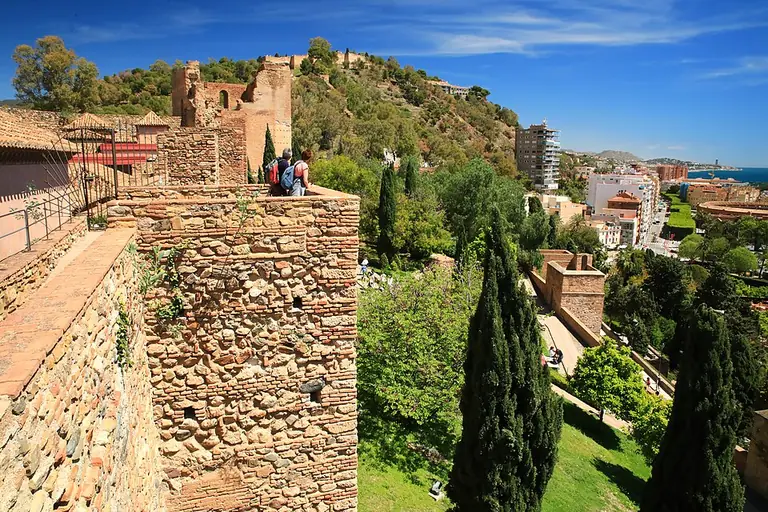

Málaga brings together the historic centre’s palaces and squares, the port, museums and seaside neighbourhoods. The Alcazaba and Gibralfaro reveal its history, Soho its street art, and Pedregalejo its fishing traditions. When choosing a place to live, compare individual streets, access to the sea and everyday journeys. Málaga is a distinct city; Costa del Sol also describes other coastal destinations.
- Country
- Spain
- Region
- Andalusia
- Sea
- Mediterranean
- Picasso
- Born in Málaga in 1881
- Airport train
- Cercanías C1: Málaga Centro Alameda–Fuengirola
Explore the destination
Málaga city and the Costa del Sol coast
Málaga is an Andalusian city on the Mediterranean. Costa del Sol is a broader coastal destination that also includes other towns and cities, such as Torremolinos, Fuengirola and Marbella. A coastal label in a property description does not establish its municipality or everyday connection with central Málaga. Start with the full address, then choose your own reference points: work, regular classes, the railway station or a favourite walk. This turns a cultural introduction to the city into a useful foundation for comparing its different parts.
History on the hillside: theatre, Alcazaba and Gibralfaro
Calle Alcazabilla reveals several layers of Málaga’s history. The Roman theatre at the foot of the hill was rediscovered in 1951. Above it stands the Alcazaba, a palace-fortress with an important eleventh-century building phase and later alterations. Gibralfaro Castle on the summit was built in the fourteenth century to house troops and protect the Alcazaba. The cathedral in the historic centre adds Renaissance and Baroque forms; its unfinished south tower explains the nickname La Manquita. Allow for different levels of exertion when planning hillside visits and walks through the centre.
Picasso, Andalusian painting and street art
Picasso was born in Málaga in 1881. His birthplace museum on Plaza de la Merced and Museo Picasso Málaga in Buenavista Palace are separate institutions with different visiting themes. At Buenavista, the sixteenth-century building itself combines Renaissance and Mudéjar elements. The Carmen Thyssen Museum introduces Spanish painting, particularly Andalusian landscapes and scenes of everyday life. Modern art has another address at the port’s Centre Pompidou Málaga, while Soho offers large murals, studios and galleries. Choose a route around the subject that interests you, leaving time to explore the surrounding streets.
The port and park as two city walks
Muelle Uno is a walking area of the port with shops and restaurants; La Farola lighthouse is a recognisable landmark on this maritime face of the city. The coloured cube of the Centre Pompidou brings a museum theme to a harbour walk. Parque de Málaga has a different layout: winding paths thread through planting, fountains, sculptures and a bandstand. For regular walks, compare particular entrances, crossings and places to pause. The recreational waterfront, an urban beach and a park offer different experiences, each needing its own route from the home you are considering.
The eastern shore and the west’s industrial memory
Pedregalejo retains its connection to a fishing past: a waterfront visit combines the promenade, fish restaurants and sections of beach divided by breakwaters. On the western seafront, La Misericordia recalls industrial Málaga through surviving chimneys along its promenade. These are two different ways to encounter the city beside the water. When choosing a home, compare the approach to a particular beach, street crossings and the trip for everyday groceries. For swimming, separately check sea conditions, flags and current services; a coastal setting cannot replace that check.
Metro, Cercanías and the airport journey
Málaga Metro and Cercanías suburban trains follow different routes. Metro Line 1 connects Andalucía Tech and Atarazanas through the university area; Line 2 runs from Palacio de los Deportes to Guadalmedina. To continue from Line 2 to Atarazanas, change at Guadalmedina. The airport is served by Cercanías C1 on the Málaga Centro Alameda–Fuengirola route, with Málaga María Zambrano providing an interchange with long-distance trains. For an individual address, assess the complete journey, including the station exit and final walk, and check transport operations for your travel date.
Orientation coordinates: GeoNames · CC BY 4.0. Coordinates reproduced unchanged; this is a city reference point, not a property address.
Choosing an area and getting to know Málaga
Explore Málaga through particular streets, cultural places and real journeys. These guides connect impressions of the city with choosing your everyday surroundings.
Choose a street through everyday routines
The historic centre, Soho and Pedregalejo offer different starting points for getting to know Málaga. Compare them against your habits as well as their photographs.
Read more
Atarazanas: a market within the city’s history
The Atarazanas market stands on the site of fourteenth-century Nasrid shipyards. Their marble gateway survives within the iron-framed market building that opened in 1879. A visit can combine architecture with ordinary shopping for fresh food. To assess life in the centre, walk from the home you are considering to the market and onward to your intended stop. Look at crossings, the ease of carrying shopping and the conditions during deliveries if these coincide with your visit.
Soho: look at façades and ground floors
A residents’ initiative underpins Soho’s artistic identity; large murals by Obey and D*Face are a visible part of its language. Galleries and studios complement the painted walls, so build a walk around more than a single photograph. Allow time for façades and smaller spaces, checking access to your chosen exhibition beforehand. If considering a home here, separately assess its windows, ground-floor activities and street sound at your usual homecoming time. The area’s artistic character does not describe conditions in every apartment.
Pedregalejo: the shore and the street behind it
In the traditional fishing neighbourhood of Pedregalejo, the promenade is associated with fish restaurants and breakwaters divide the beach frontage. For an initial visit, observe the connections between walking beside the sea and moving through neighbourhood streets. When choosing a home, repeating your own journey with groceries or after a trip is more useful than stopping at a waterfront lunch. Check current promenade passages and the location of the bus stop you would use. Do not extend the impression of one terrace to the whole seaside area.
Compare journeys by transport system
On Málaga’s map, consider Metro, Cercanías suburban trains and buses separately. Their stops, directions and roles in an everyday journey are different.
Read more
C1: the airport and coastal corridor
Cercanías C1 serves the airport on the Málaga Centro Alameda–Fuengirola line. Málaga María Zambrano is the stop for changing to AVE high-speed trains; its name differs from the central terminus, Centro Alameda. If flights or coastal journeys matter to you, identify the required station and direction before choosing an address. Then check the route from your front door to the platform, interchanges and return journey. Match the timetable to your particular flight, allowing your own time buffer.
Metro: Atarazanas and the Guadalmedina interchange
Line 1 runs from Andalucía Tech through the university area to Atarazanas, while Line 2 connects Palacio de los Deportes and Guadalmedina. A Line 2 passenger travelling to Atarazanas changes trains at Guadalmedina. For travel between Line 2 and the western part of Line 1, the interchange is El Perchel. These distinctions help when comparing addresses connected to the university, western neighbourhoods or the centre. Walk the approach to your intended entrance and check current service notices.
The Express bus and the final leg
As well as the railway, an Express bus connects the airport and central Málaga. Choose between it and C1 around the specific stop, your travelling time and the journey with luggage. For a seaside address in Pedregalejo, separately identify the city bus and remaining walk from its stop: a useful airport connection to the centre does not resolve that part of the journey. Compare the late-evening return as well. A fixed journey time without a travel day and chosen stops is of limited use for this decision.
Build your own museum route
Málaga’s museums explore different themes: an artist’s biography, historical painting and modern art. Their buildings also become part of your introduction to the city.
Read more
Two Picasso addresses
The birthplace museum on Plaza de la Merced connects Picasso’s work with childhood, family surroundings and early artistic experience. Museo Picasso Málaga in Buenavista Palace turns to his works; the building itself reveals the combination of Renaissance design and Mudéjar tradition. Decide what you want to discover first and plan the visits as two separate occasions. If cultural life affects your choice of neighbourhood, assess the programme alongside your journey home after exploring the surrounding streets.
Carmen Thyssen: landscape and everyday life
The Carmen Thyssen Museum occupies Palacio de Villalón, a sixteenth-century palace. Its artistic focus is nineteenth- and early-twentieth-century Spanish painting, particularly Andalusian landscape and costumbrismo, depicting local customs and everyday life. This route encourages a closer look at representations of streets, festivities and rural scenery. Choose one theme to explore beforehand and check the current display. Afterwards, leave separate time for the surrounding city neighbourhood rather than reducing your introduction to a list of galleries.
Centre Pompidou: art on a port walk
Centre Pompidou Málaga opened in 2015. Its architectural landmark is El Cubo, with a colour intervention by Daniel Buren; the museum is in the port and introduces works from the Centre Pompidou collection. A museum visit and a waterfront walk can complement each other, but call for different kinds of attention. Check the exhibitions on your chosen day and allow dedicated time for the galleries. If you enjoy returning to museums, assess the practicality of regular journeys as well as the cube’s first visual impression.
Choose green walks around your habits
A park within the urban fabric, a historic botanical garden and a hilltop fortress offer different paces. Compare them as particular walks rather than interchangeable patches of green.
Read more
Parque de Málaga: a short walk with details
The winding paths of Parque de Málaga organise space between planted islands, fountains and sculptures; a bandstand adds another landmark. Both the plants and the arrangement of a public garden reward attention here. For a daily walk, identify a suitable entrance, somewhere to pause and a convenient crossing on your return. Repeat the route at the time of day when you normally leave home. This helps establish whether that particular part of the park fits your routine.
La Concepción: a garden with its own history
La Concepción historical botanical garden lies north of the centre by the River Guadalmedina. Jorge Loring and Amalia Heredia developed it with a French gardener; subtropical planting combines with water features and architecture. The Museo Loringiano pavilion, built in 1859, recalls its owners’ interest in archaeology. Plan the garden as a separate outing: check visiting hours, the approach to its entrance and your return transport. When choosing a home, distinguish an interest in occasional botanical visits from the need for greenery beside your front door.
Gibralfaro: understand the city from above
Gibralfaro fortress occupies a hilltop with steep slopes and views across the city and bay. Its fourteenth-century military role was to house troops and protect the Alcazaba. This helps explain the urban landscape: the historic centre, hill and sea are visually connected, but walking between them needs separate planning. Check the approach to the entrance, surfaces and ascent; choose another way of arriving if needed. The fortress outlook is useful for getting to know Málaga, while everyday journeys are best tested at street level.
Properties in the city
- Sierra Blanca Tower
- Císter Place
- Zeta Valley
- AQ Urban Sky
- Residencial Citrea
- El Perchel
- AQ Urban Zenit
- AQ Zivit
- Creative Homes Bulevar
- Zitizen
Photo credits
1. Benjamin Smith · View from the Alcazaba towards Gibralfaro · CC BY-SA 4.0. Resized, WebP format.
2. JanTappenbeck · Panorama of Málaga from Gibralfaro · CC BY-SA 3.0. Resized, WebP format.